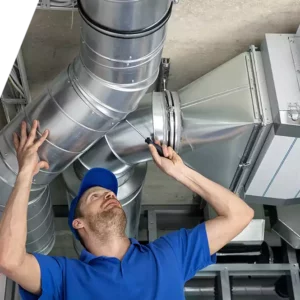
One of more important aspects of heat recovery is delivering fresh air inside the building. That’s the role of ventilation, which is also a heat recovery role. Heat recovery systems are equipped with filters, which play a key role in getting rid of pollutants such as dust, pollen, microorganisms and other allergens. Thanks to that, ventilated air is cleaned and delivered to the premises, creating a healthy and clean environment for occupants.
Many manufacturers disregard filters’ role, for example installing a “mosquito net” instead. It’s a cheaper solution from a material shopping perspective, although these devices should always be installed with a ground exchanger, in which cleaning air happens in a natural way. Not cleaning the air before letting it into the building always ends the same, the biggest cost; health.
Air filters
Scientific research confirms an important role of clean air in providing health and good well-being. It even has an impact on our sleep quality. The impact of PM 2.5 (particles smaller than 2.5 micrometers in diameter) and PM 1.0 (particles smaller than 1.0 micrometers in diameter) on our health is particularly significant. These microscopic particles can penetrate deeply to our respiratory system and settle on the lungs, which can lead to serious health problems. While there is still a chance to get rid of the larger particles, the small ones tend to stay with us until we die. This is how, for example, the cancer-causing agent asbestos works.
Air quality impact inside our home on occupants’ health
Research findings indicate that long term residence in places with polluted air can cause a variety of negative effects on health. Particles PM 2,5 and PM 1,0 (buy filters which also cover this part of pollutants) are considered factors of risk for development and worsening of the cardiovascular system, because particles PM 1,0 and smaller ones have the ability to penetrate into our circulatory system.
Additionally, polluted air can have a negative impact on our general condition, causing irritations of skin, eyes, throat and nose. There can be symptoms like feeling of exhaustion, headache, problems with concentration and worsening of sleep. How often, or when was the last time you woke up hungover without drinking alcohol? If these situations do not take place, then you are living in “hygiene”, or you are more resistant than others, but not unbreakable. Some smokers live up to their 80s and cancer doesn’t take them, but from too much health nobody dies, because long term exposure to polluted air increases the risk of more serious diseases appearing, such as cardiovascular diseases, strokes, lung cancer and can also affect overall life length.
That’s why improvement of air quality inside buildings has a key meaning to health and good condition of its occupants. Heat recovery systems, thanks to their filters, effectively get rid of particle PM 2,5 and PM 1,0, and also other pollutants, providing fresh, cleaned air to breathe.
Air quality norms in living room – heat recovery
According to World Health Organization (WHO) guidelines, exposure to dust PM2,5 (particles smaller than 2,5 micrometer in diameter) isn’t supposed to approximately cross level 5 ug/m3 on an annual basis. It is a recommended value meant to protect people’s health.
In the case of Poland, national norms regarding dust PM2,5 set the permissible level at 3ug/m3 on average per year. The difference between WHO parameters and Polish norms is due to various factors, such as local atmospheric, geographic or economic conditions, but are we therefore less exposed to their pathogenic effects, or would the Polish State simply have to pay unbelievable compensation for damage to health caused by poor air quality?
Correct monitoring and control of exposure to dust PM2,5 is relevant for public health protection. Using effective heat recovery systems, equipped in filters with high effectiveness, can significantly contribute to reduction of particles PM2,5 level inside buildings. It’s an important step towards assurance of a healthy environment for occupants and reduction of negative exposure to polluted air.
This leads us to conclude that improving air quality inside has a significant meaning for health and good well being. Research confirms that particles PM 2,5 and PM 1,0 have negative influence on our health, and long term residence in places with polluted air can cause various diseases. That’s why using heat recovery systems, which clean ventilated air is a key element in creating a healthy and clean indoor environment for occupants.
Negative effects of too high level of co2 in the room
Carbon dioxide (CO2) is one of the main greenhouse gasses responsible for climate change. Although apart from its impact on the environment, CO2 can also have a negative impact on our health, especially in case of exposure to excessive concentration in enclosed spaces.
The World Health Organization (WHO) has not set specified standards for CO2 contents in the air because of its low, being more specific, toxicity not thoroughly tested. Although there are recommendations on keeping CO2 levels under 1000 ppm (parts on million) inside buildings to ensure comfort and appropriate quality of air for health. Exceeding this level can cause unfavorable health effects.
Over exposure to CO2 has “low toxicity” says WHO, but we know for sure that it can cause shortness of breath, feeling of exhaustion, headaches, concentration disorders, deterioration of sleep quality etc. Overall, high levels of CO2 can affect the respiratory system causing irritation of the respiratory tract and increase the risk of asthma and even allergies.
Does heat recovery prevent acidification?
We will devote a separate paragraph to discussing the next aspect, due to its importance. We are talking about acidification of the body caused by excessive CO2 concentrations in the air. As we know, in the process of breathing, the body removes carbon dioxide from the blood and replaces it with oxygen. If CO2 levels are too high, the body may not be able to remove it effectively, leading to acidification. Acidification, caused by excessive concentration of CO2, can have many negative consequences for human health. One of them is organ and tissue hypoxia which can lead to organ failure. Too high concentration of CO2 in the body can interfere with the normal process of oxygen and carbon dioxide exchange, making it difficult to supply sufficient oxygen to the tissues and other vital organs.
Hypoxia can affect the heart, brain, liver, kidneys and other vital organs, leading to weakness and malfunction.
“After all, my child sitting in a classroom with the other children is in a much higher concentration of CO2 than is acceptable/suggested”, exactly! First symptom of too high concentration of CO2 is for example “excessive yawning”. I think we all know this but it’s a short term exposure. The one lasting longer is for example after coming home, in which parents, against the laws of nature, just at their place gravity ventilation will work… Such a statement can cause development of many conditions, caused by the malfunction of the bodies mentioned above. Increases in acidity levels can weaken our immune system, which causes our organism to be more vulnerable for infections and diseases. It can also affect metabolism, metabolic disorders, weight loss or difficulties with controlling it, absorption of nutrients and elimination of toxins. Chronic acidification can lead to loss of energy, tiredness, weakness of muscles, joint pain and even mood disorders and depression. Since you’ve read this article, you know that Ariel is not fat, he has an acidified organism.
Such a joke to loosen up but complications are really serious, because it’s not the end. Organ hypoxia can have long term consequences for health. For example, brain hypoxia can cause problems with concentration and even mood disorders and depression. Heart hypoxia can contribute to the development of cardiovascular diseases such as hypertension, coronary artery disease or heart attack. Hypoxia of the liver and kidneys can affect their functioning and lead to chronic diseases in them. In extreme cases, hypoxia of any organ can lead to the formation of cancer cells on it.
Long term effects of body acidification can be various and affect many aspects of health. That’s why it’s important to take care of acid-base organism balance by providing proper ventilation, delivering fresh air and use of effective heat recovery systems, which can help to keep right levels of CO2 and provide optimal health conditions.
After reading this subsection, if you don’t have the money to install heat recovery at home, go to the forest and walk around as often as you can to breathe. Oxygen excess can kill us but the right amount is a salvation for us, that’s why it’s so important to provide the right level of ventilation and air exchange inside buildings, especially in places with many people around. Efficient heat recovery systems, by delivering fresh air and getting rid of polluted air, can help in keeping the right concentration of CO2 and provide a healthy and safe environment inside buildings.