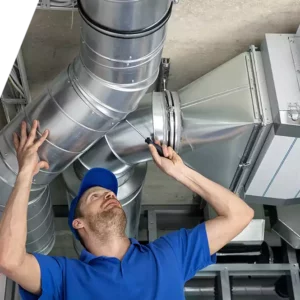
Mechanical ventilation is a process, which enables heat recovery from ventilated air to minimize energy losses and maximize energy effectiveness of the building. The operation of the heat recovery system is based on the use of a heat exchanger, which enables heat transmission between air streams.
The energy revolution – What is the role of heat recovery?
The process begins from fresh air intake from outside, which enters the building through the ventilation system. At the same time, used air from premises is removed to the outside. Heat exchanger, being a key element of the heat recovery system, enables heat transmission between air streams, minimizing energy loss.
How does a heat exchanger work?
Heat exchanger, consists of two canals – one for intake air and a second one for exhaust air. Intake air, which is chilly or cold, flows through one canal, while exhaust air, which is warm, flows through the second canal. Thanks to this arrangement, heat is transmissioned from exhaust air to intake air, warming it before entering the premises.
Heat exchanger is usually made out of high thermal conductivity materials, such as aluminum and ceramics, which enables effective transmission of heat between air streams. It’s also important that the heat exchanger is appropriately isolated, to minimize heat loss to the environment.
Heat exchange in a heat recovery system can take place in different ways, depending on the specific type of heat exchanger. These can be plate, cross, torsion or tube heat exchangers. Each of those exchangers has its own traits and effectiveness, adapted to different conditions and requirements of the building.
As a result of the heat recovery process, heat, which normally would be lost due to extracted air, is recovered and used to warm up the intake air. It leads to significant savings of energy, because it requires less amount of energy to heat fresh air entering the building. Those savings contribute both to reducing greenhouse gas emissions and reducing costs related with the heating of the building.
It is worth noticing that recuperation systems can also be equipped with additional functions, such as air filters, which helps with cleaning the air from pollutants, allergens and microorganisms. It provides a healthier and cleaner internal environment for building occupants.
In summary, mechanical ventilation is a process of heat recovery from ventilated air, which enables to minimize energy loss and maximize energy effectiveness of buildings. It works by using a heat exchanger, which enables heat transmission between air streams. Heat recovery contributes to significant savings of energy and air quality improvement inside of the buildings, which translates both into benefits for the environment and building occupants.